
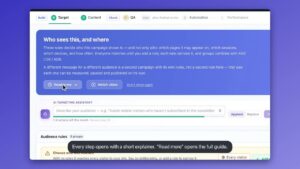
Readers describe the problem. The library answers with the right three.
A service manager types “how do we stop customers missing appointments” and gets a guide, a template and a webinar from the site’s own library, each with the reason it fits. The bar is worded for each segment — an HVAC contractor, a customer, a regular reader. Switch the visitor below to see four readers.
Built with AI Content Finder — see the feature →
Guides for the people who run the vans
Scheduling, dispatch, maintenance plans and getting paid on site — written by people who have run service teams.



 The day-before reminderGuide · 7 min readCovers the two texts that do most of the work: the day-before reminder and “on my way.”Step by stepMost readUpdated SeptemberPick 1Appointment text templatesTemplate · copy and pasteTwelve ready messages, including reschedule and running late.Ready to usePlain textPick 2Two-hour windows, not fourWebinar · 42 minA 30-tech team narrowed its arrival windows, so customers knew when to be home.RecordingQ&A includedTrendingPick 3
Your articles and pages, picked for the question, behind a bar written for each segment.
Point it at your library
The articles you already feed to content recommendations, and the pages of your own site, are what the finder picks from — guides, templates, webinars, help pages.
Word the bar for each segment
Write a question with variables such as ${industry}; the assistant answers it as one line per segment. Customers, prospects and regular readers can each get their own version.
Let it pick, and say why
The reader describes the problem. The results sheet lists a few pieces, each with one sentence on why it fits, and can add a section such as a booking calendar when the reader asks for a person.
How the AI Content Finder works on this resource library.
Readers describe the problem, not the keyword
“How do we stop customers missing appointments” is answered with a guide on day-before reminders, a set of text templates and a webinar on arrival windows — three formats, one problem, and a short summary of how they fit together.
Every pick says why
Each card carries one sentence on why it answers what was asked, and up to three short points. The title, format and link come from the content catalog or the site’s own pages, so the finder cannot recommend an article that does not exist.
The bar is written for the segment, not the person
A company resolved as a 60-person HVAC contractor gets the bar’s mid-size version, whose line is written from ${industry} — and every mid-size firm in that industry reads the same words. The “Case studies in HVAC” chip appears only because the industry is known; without it, the chip is left out rather than shown with a gap.
Customers get the help center, not a sales pitch
A HubSpot lifecycle stage of “customer” switches the bar to its help-center version and hides “Book a demo”. The picks are help pages and a how-to video from the site itself.
A person appears when the reader asks for one
A Customer Success booking calendar is attached to the results page as a section the AI shows only when it is relevant. “Can someone walk me through it” brings it up, with open times from the host’s calendar; the other three readers never see it.
“What are people reading” is the engine’s answer
Asked what is popular, the finder uses the content rankings the recommendation engine keeps — trending and newest here. Past dispatch reading picks the bar’s version; the summary never mentions what the reader viewed.
See how it is built, and where else it fits
Questions about this example
What can the AI Content Finder recommend?
Articles from the account's content catalog and pages of its own website, such as guides, templates, webinars, case studies and help-center pages. The title, format and link on each card come from that content; the AI writes the short summary and the reason each piece fits the question.
How is the finder bar personalized for each segment?
The finder is an action in a Personyze campaign, so each audience can get its own version of the bar. Its words can also be written per segment from a question with variables, such as the visitor's industry from an ABM integration. Everyone in that segment reads the same line, and a chip that needs a value the visitor does not have is left out.
Can the finder hand a reader to a person?
Yes. Other campaign content, such as a Meeting Scheduler booking, can be attached to the results page as a section that the AI shows only when it is relevant, for example when the reader asks for someone to walk them through a task. The finder runs on the AI Chat Agent add-on.
Turn your library into answers.
Let readers say what they are trying to fix, and answer with the right guides, templates and pages from your own site — each with its reason, behind a bar written for each segment.