
Best-Performing Landing Pages: How Relevance, Personalization, and Testing Win
Most advice about the “best-performing landing pages” fixates on the template — the hero shot, the button color, the testimonial slider. Those matter at the margins. But the pages that actually convert win on three things the template can’t give you: relevance to why the visitor showed up, personalization to who they are, and testing to prove what works. And none of it requires a separate hosted landing-page tool — your best-performing page can live right on your own site.
Here’s how top-performing landing pages are built, an AI prompt you can use to write per-persona copy, and why hosting the page yourself beats spinning one up on a standalone builder.
Relevance is the number-one driver
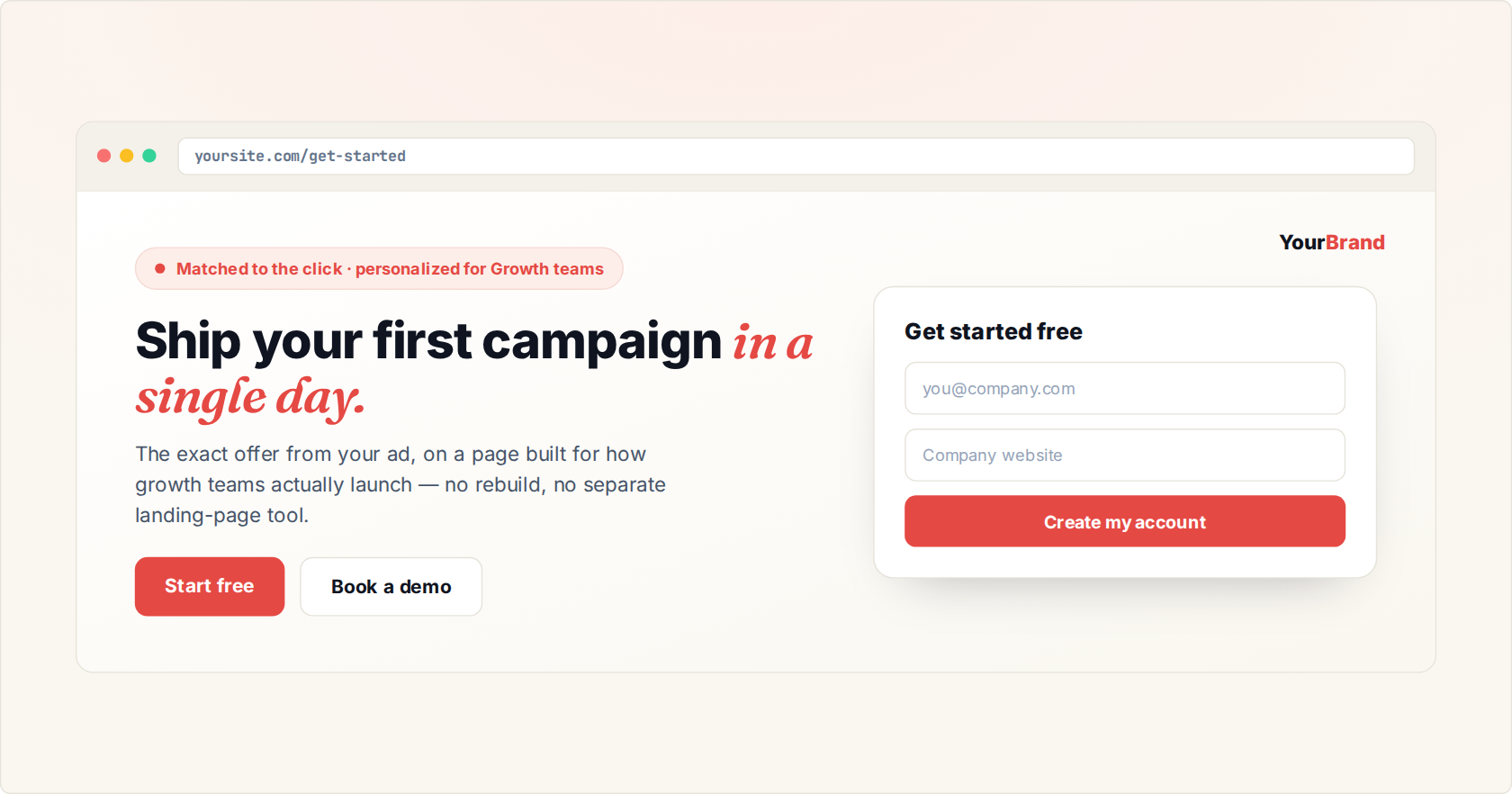
The single biggest lever on landing-page performance is message match: how closely the page’s headline, offer, and CTA mirror the promise that got the visitor to click. A page that restates the exact offer from the ad, email, or QR code the visitor came from feels like the obvious next step. A generic page makes them re-orient — and re-orienting is where conversions leak.
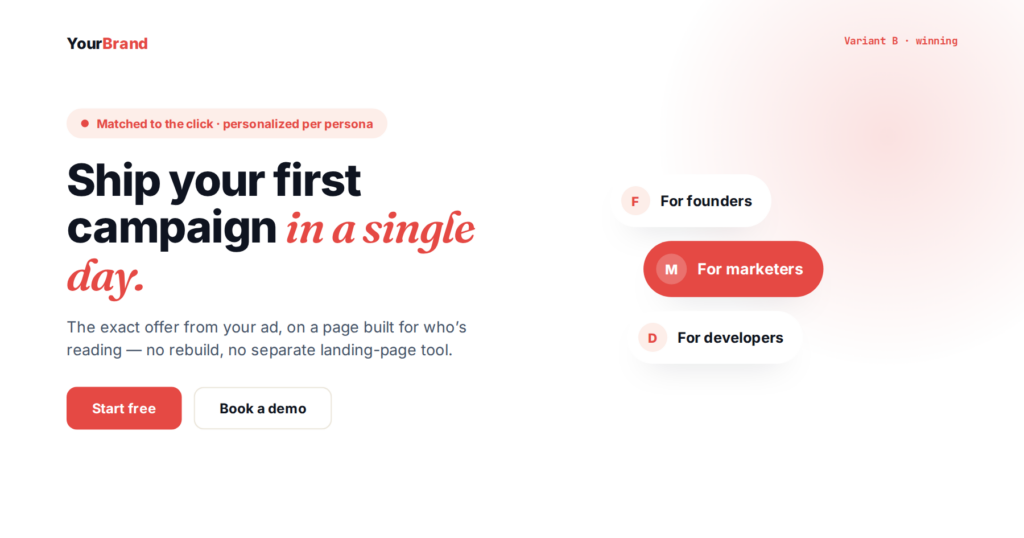
Personalization is how you scale relevance. Instead of one page for all traffic, dynamic landing pages with a personalized title and CTA swap the headline, hero, proof, and call to action based on the campaign, source, or audience — so every visitor lands on a page that looks built for them. Even an offline campaign can carry through: see how an offline-to-online QR code campaign hands the page the context to personalize on arrival.
Personalize per persona, not just per visit
Two people can land on the same URL for very different reasons. A founder cares about speed and traction; a marketer cares about conversions and autonomy; a developer cares about how it drops into their stack. The best-performing landing pages speak to each of them — same page, different message.
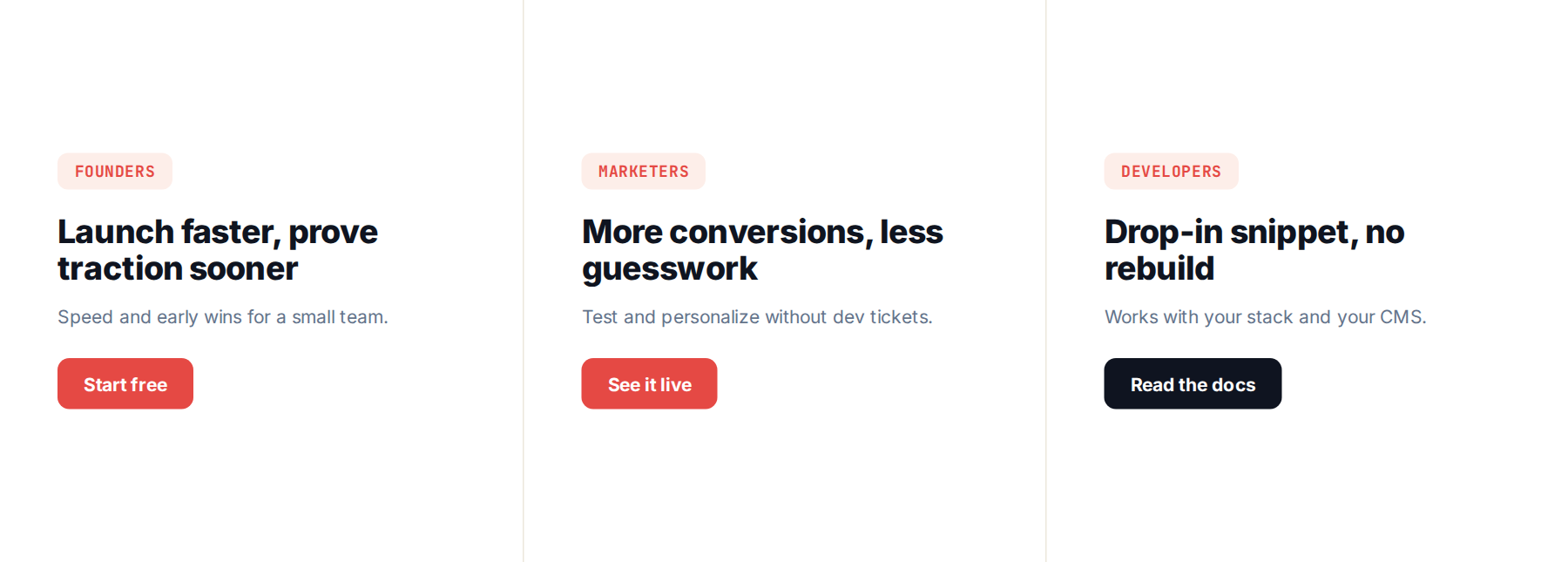
With behavioral targeting and a unified visitor profile, you decide which persona each visitor belongs to — from their source, behavior, firmographics, or CRM data — and serve the matching variation automatically.
Use AI to write the per-persona copy
Writing a distinct hero for every persona is the part teams stall on. An AI assistant makes it fast: give it the offer, the persona, and where the traffic came from, and let it draft variants you can drop in and test. Here’s a reusable prompt — fill in the brackets and run it once per persona:
You are a senior conversion copywriter. Write landing-page hero copy for [PRODUCT / OFFER].

Audience / persona: [PERSONA — role, company type, seniority]
Their main goal: [WHAT THEY'RE TRYING TO ACHIEVE]
Their biggest objection: [WHAT MAKES THEM HESITATE]
Where they came from: [TRAFFIC SOURCE — e.g., a Google ad for "X", a nurture email, a QR code at an event]
Brand voice: [TONE — e.g., confident, plain-spoken, benefit-led, no hype]

Produce:
1. A headline (max 9 words) that matches the promise of the traffic source and speaks to the goal.
2. A one-sentence subhead that addresses the objection.
3. Three benefit bullets in the persona's own language.
4. A primary CTA (2–4 words) and a secondary CTA.

Give me 2 variants for each so I can A/B test them.
Generate one set per persona, load each as a variation on your page, and let the data pick the winner — which is the next step.
A/B test — by audience, not just the average
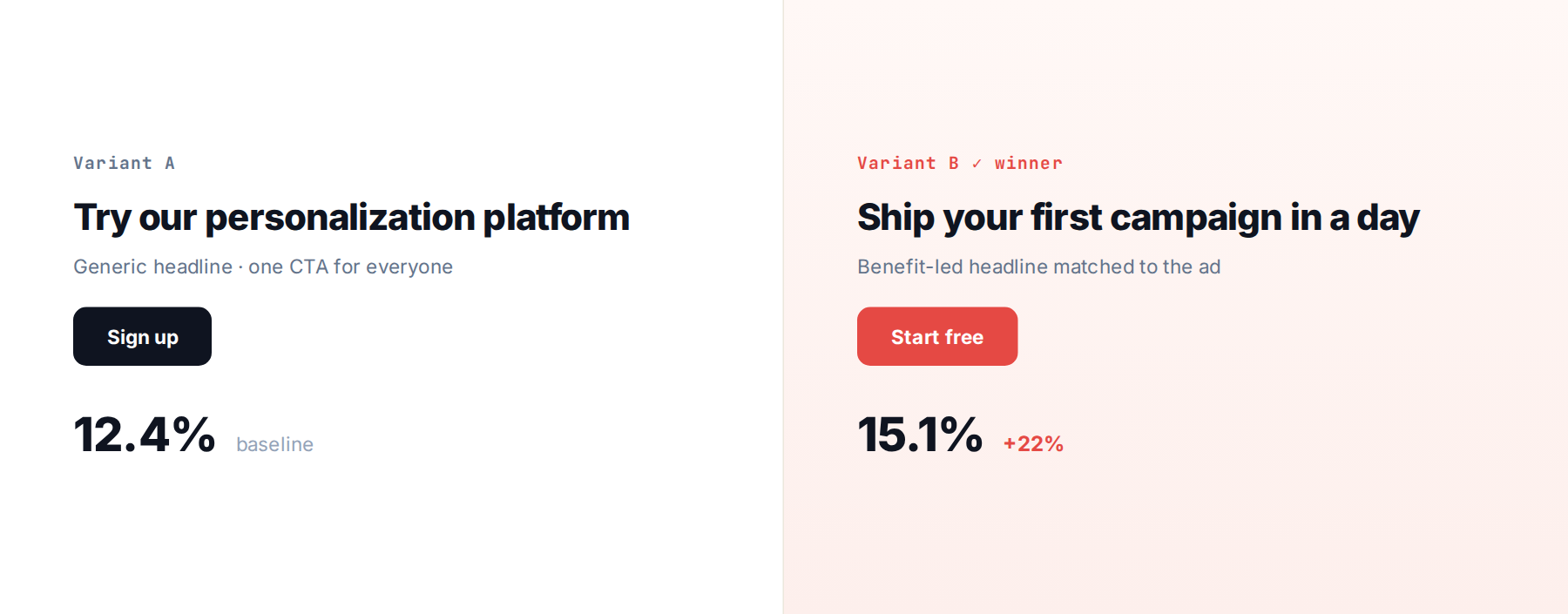
No one writes the best-performing page on the first try; they test their way to it. Run variants of the headline, hero, offer, proof, and CTA, and keep what wins. The nuance most tools miss: a variant that loses on the average can win decisively for a specific segment. Audience-oriented A/B testing lets you read results by persona, so you don’t throw away a page that’s perfect for your highest-value visitors just because it underperformed for everyone else.
You don’t need a hosted landing-page service
Standalone landing-page builders — tools like Unbounce, Instapage, or Leadpages — host the page on their own infrastructure, usually on a separate subdomain or a URL that isn’t quite your site. That creates real costs:
- You split your domain and SEO. A page on a vendor subdomain doesn’t build authority for your site, and the URL doesn’t match the rest of your funnel.
- You re-stitch analytics and pixels. Tracking, consent, and tag management have to be rebuilt outside your normal stack.
- You rebuild your design system. Brand, components, and navigation get recreated in a different editor and drift over time.
- You lose the visitor profile. The page can’t see the behavior and history your own site already knows, so personalization is shallower.
When the page lives on your own site, none of that applies. You personalize and test the pages you already have — same domain, same analytics, same design system, full visitor profile, no migration and no extra subscription for hosting. The best-performing landing page isn’t a page you host somewhere else; it’s your own page, made relevant.
Measure what it’s worth
Before you invest, size the prize. Personyze’s behavioral targeting ROI calculator lets you estimate what relevance and personalization on your key pages are worth — plug in your traffic and conversion value to see the revenue a lift would add, then prioritize where to start.
Where Personyze fits
Personyze turns your existing pages into top performers without a separate hosting tool: dynamic landing pages with personalized titles and CTAs, behavioral targeting to decide who sees what, and A/B testing to prove it — all on your own site, no code required. It’s part of the complete website personalization platform.
Best-performing landing pages: FAQ
What makes a landing page high-performing?
Relevance first: the page’s headline, offer, and CTA should match the promise that got the visitor to click. Layer on personalization per audience or persona, then A/B test to prove what converts. Design polish helps at the margins, but message match and testing drive the result.
How does personalization improve landing page conversion?
Personalization scales relevance. Instead of one page for all traffic, you swap the headline, hero, proof, and CTA based on the visitor’s source, behavior, or persona — so each visitor sees a page that feels built for them, which lifts conversion.
Can I use AI to write landing page copy per persona?
Yes. Give an AI assistant the offer, the persona, the traffic source, and your brand voice, and have it draft headline, subhead, bullets, and CTAs — ideally two variants per persona so you can A/B test them. A reusable prompt template is included in this article.
Do I need a hosted landing page service like Unbounce or Instapage?
No. Hosted builders put the page on separate infrastructure, which splits your domain, SEO, analytics, and design system from the rest of your site. When the page lives on your own site, you personalize and test it in place — same domain, same analytics, full visitor profile, no extra hosting subscription.
More on AI in Personyze
- AI personalization agent — describe a campaign and it builds it, styled to your brand.
- AI marketing agent — how plain-language requests become staged campaigns.
- Personyze MCP server — run all of it from Claude or ChatGPT.
- Add Personyze to Claude — install the connector from the Claude directory.
How should I A/B test landing pages?
Test one element at a time — headline, hero, offer, proof, or CTA — and read results by audience, not just the average. A variant that underperforms overall can win for a high-value segment, so audience-oriented testing prevents you from discarding a page that’s ideal for your best visitors.
Make your best page your highest performer. Personalize and test the pages you already have — start free or book a demo.
Book a demo with a personalization expert
30 minutes with a personalization expert. Bring your stack, your goals, your skepticism. We'll show you what changes when every visit feels like the only one.